01
Treatment assistance
Support for families who find the cost of diagnosis, surgery, casts, braces or rehabilitation too heavy to carry — through free or subsidised care, and help with orthoses, mobility aids and travel.
SPANDA is a charitable trust for children whose spine, legs or muscles make it hard to stand tall, walk or play — and for the families who stand beside them.
स्पन्द · pronounced SPUN-duh — the Sanskrit word for a pulse, a throb, a vibration that starts on its own.
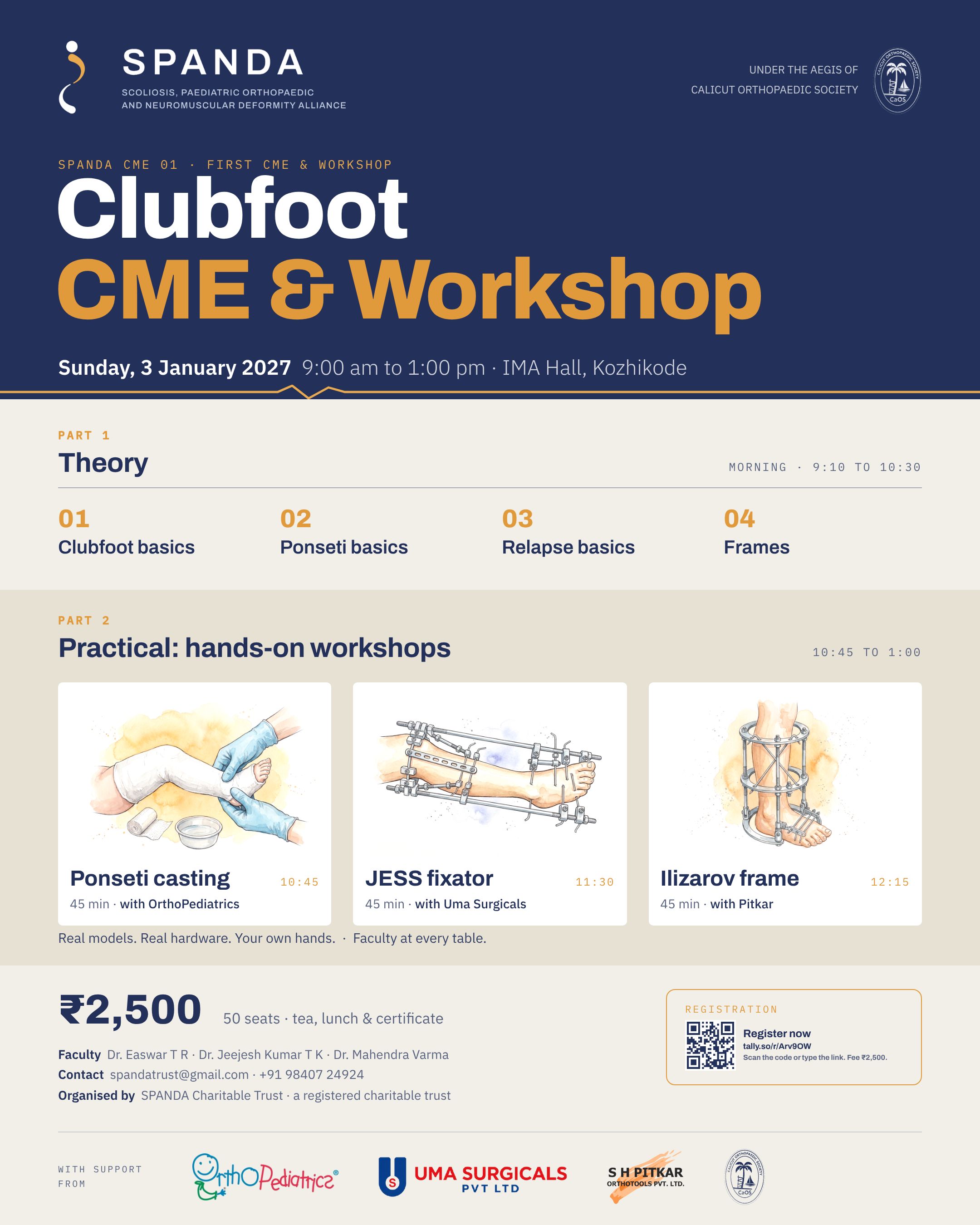
Registration · ₹2,500 Clubfoot CME & Workshop 2027 · Sunday 3 January 2027 · IMA Hall, Kozhikode
See the event and how to registerWhat SPANDA means
Spanda — the pulse, the throb, the first stir of movement. Every child who walks into our clinic begins there: with a heartbeat, a step that is not quite straight, and a family hoping it can be put right.
Our trust brings together scoliosis, paediatric orthopaedic and neuromuscular deformity care, because in children these problems rarely arrive alone. A curved spine, a foot that turns in, a limb that is short or a muscle that will not relax all need the same thing — early, expert, unhurried attention.
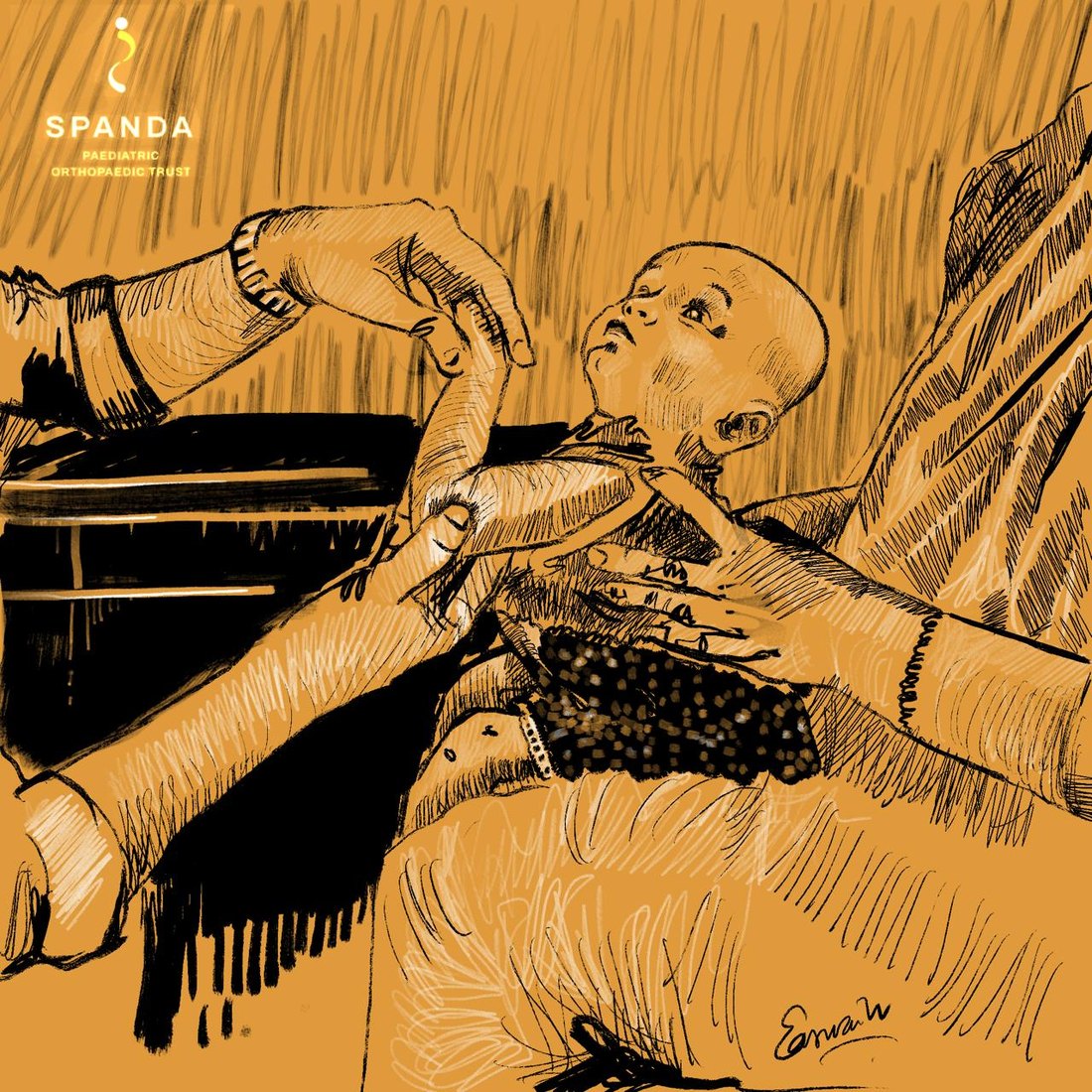
From the SPANDA sketchbook — the examination that starts everything.
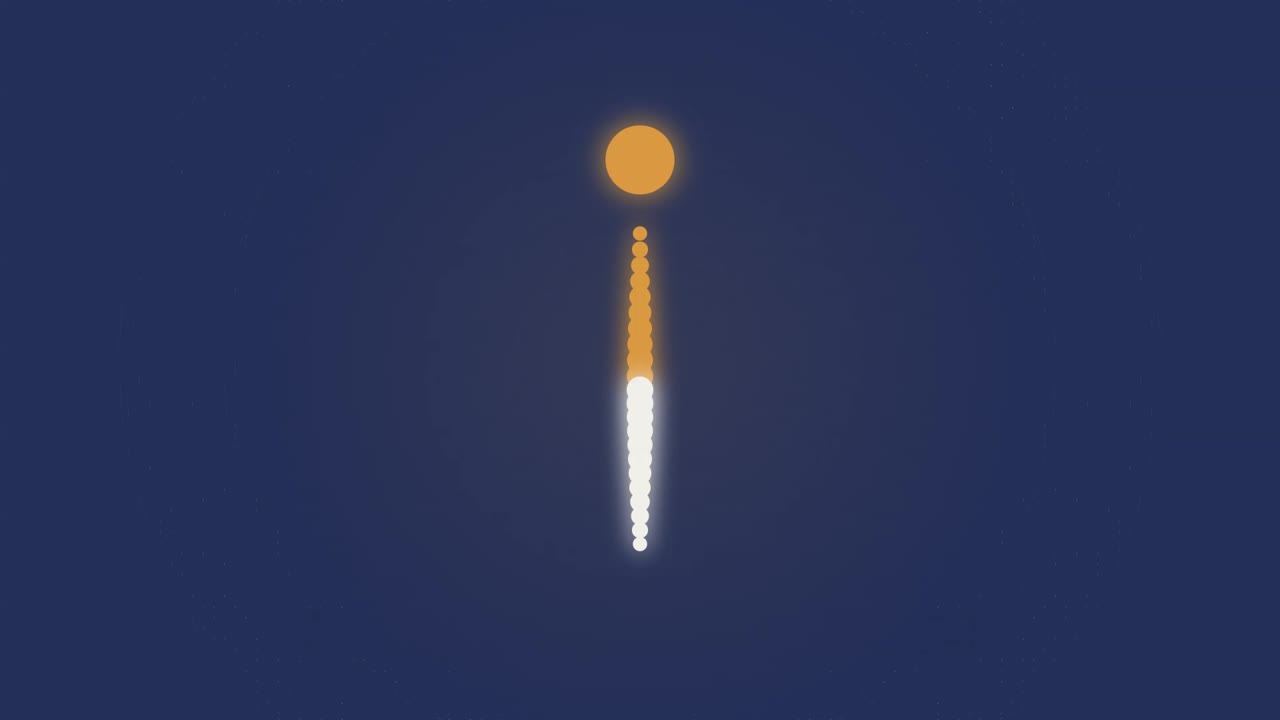
The film
A dot of amber becomes a pulse. The pulse becomes a line, the line gathers into a column, and the column settles into the SPANDA mark — a shape that is still moving. That is the argument of the film and of the trust: a child's movement begins somewhere very small, is built by repetition, and ends in a shape that can stand.
It is also a portrait of the work. Rhythm is what a physiotherapist teaches a child with cerebral palsy; the line is the curve a spine surgeon measures and corrects; the column is the growth that has to be protected while the correction holds.
The full film · 2 min 57 s · English, with Malayalam
This is the longer film, and the one that sets out the trust's work most directly. It walks through the conditions that bring a child to a paediatric orthopaedic clinic — a spine that curves, a foot that turns in at birth, hips that fail to seat, limbs that are short or bowed, bones that break too easily, muscles and nerves that will not do what a growing body asks of them. It shows what care looks like when it is done properly: casting, bracing, physiotherapy, gait assessment, growth-friendly spinal surgery, limb reconstruction with external fixators, and the long follow-up that holds a correction in place. And it sets out why the work needs a charitable trust beside it — for the family that cannot carry the cost, for the village that does not know the condition has a name, and for the clinician who needs to be trained closer to home.
Scoliosis and other spinal deformity. Cerebral palsy. Neuromuscular disease — muscular dystrophy, spinal muscular atrophy, nerve and muscle disorders of childhood. Deformity of the limbs: bow legs, knock knees, limb length difference, rotational problems. Clubfoot and other congenital foot deformity. Developmental dysplasia of the hip, Perthes disease, skeletal dysplasia and the rare genetic conditions that bring all of these together.
Early detection and parent education. Ponseti casting and the boots-and-bar that hold a clubfoot corrected. Bracing and spinal orthoses, and lower-limb orthoses that let a child walk. Physiotherapy, gait assessment and spasticity management. Growth-friendly and definitive correction of the spine. Limb reconstruction and gradual correction with external fixators — the Ilizarov frame and the JESS. Multidisciplinary clinics for rare disease, and training for the clinicians who will run them.
A cast series costs money; so does a brace, a frame, a journey to a follow-up. SPANDA was settled to carry the part of the work that a hospital cannot: the awareness that brings a child in early, the treatment support that keeps a family in the plan, and the teaching that puts a competent pair of hands closer to home.
The mark, forming
Ten seconds of the same idea reduced to its simplest: a ripple, a heartbeat line, and the SPANDA mark arriving out of both.
How SPANDA helps
The trust was written with one idea in mind: that a child should not be held back by the cost, the distance or the silence around a bone or nerve problem.
Support for families who find the cost of diagnosis, surgery, casts, braces or rehabilitation too heavy to carry — through free or subsidised care, and help with orthoses, mobility aids and travel.
Clear, trustworthy information in simple language, in English and Malayalam, so that parents, teachers and health workers know what to look for and what to do next.
Courses, workshops and hands-on training for orthopaedic surgeons, postgraduates, physiotherapists, orthotists and nurses — so that more children meet skilled hands.
For parents, teachers & families
Take your child to a paediatric orthopaedic surgeon for an early check. These are warning signs, not a diagnosis — many children do far better when a problem is found early.
What SPANDA does about itOur first course · SPANDA CME 01
One Sunday morning of clear theory and honest, hands-on practice: Ponseti casting on real pliable models, the JESS fixator and the Ilizarov frame — with faculty at every table.
Also from SPANDA
22 October 2026 · Kozhikode
Rare genetic, bone and muscle conditions seen by five specialists on one day. SPANDA supported the launch.
Read about the clinic →
Fundraiser · Parental awareness
Original artwork, sold so that a child can be braced, cast or operated on — and shown so that parents recognise the signs early.
See the collection →
Who we are
SPANDA was founded and is governed by three paediatric orthopaedic surgeons who have spent their working lives in children's bone and spine care in Kerala.
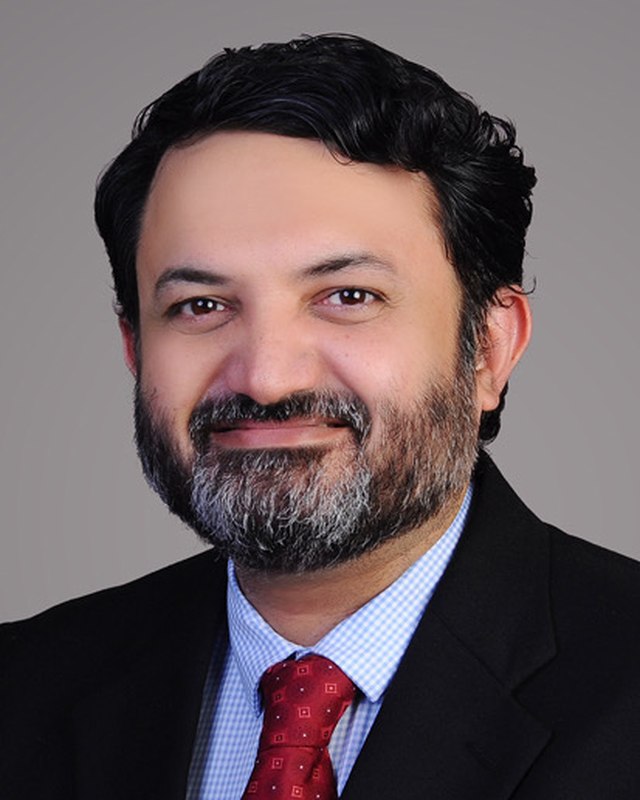
Paediatric orthopaedic & spine surgeon. Founder of SPANDA; clubfoot, scoliosis and cerebral palsy care.
Profile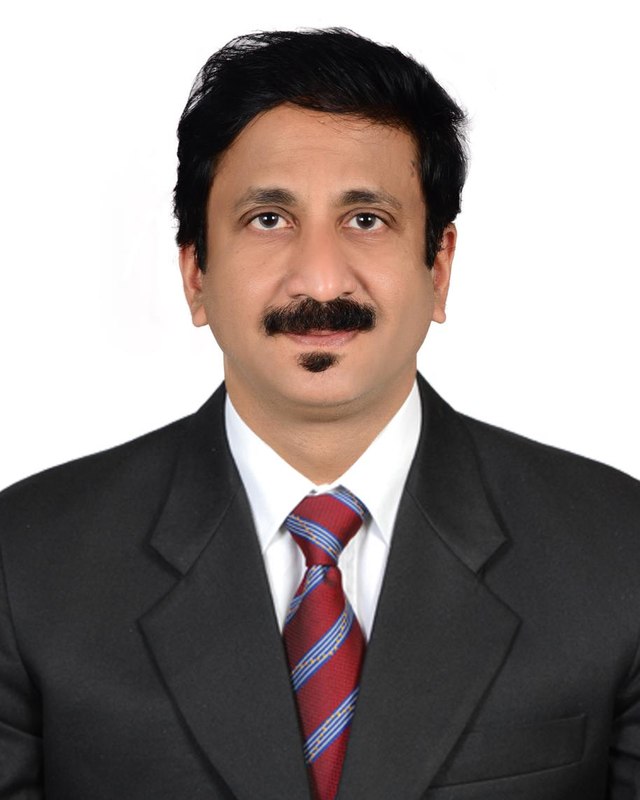
Limb reconstruction surgeon and Associate Professor of Orthopaedics, Government Medical College, Kozhikode.
Profile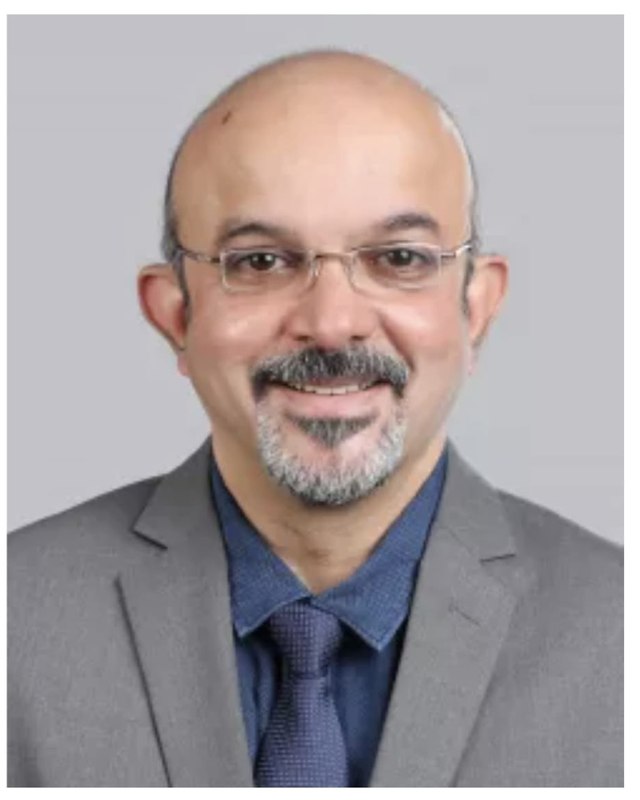
Senior Consultant in Paediatric Orthopaedics, Aster MIMS, Calicut.
ProfileWhether you are a family looking for guidance, a doctor who wants to teach, or a supporter who can fund a cast, a brace or a journey to hospital — there is a place for you here.